Affiliate disclosure: This guide includes affiliate links. If you buy a product through our links, ProfitHub may earn a commission at no extra cost to you. Read our affiliate disclaimer.
Shopping for a brain pill for a high-stress finance job starts with one clear question: what exact problem do you want to solve? Short sleep, memory slips, and desk stress need separate care. A pill cannot prove it helps traders just by printing market words on the box. See NCCIH supplement guidance.
Published trials give strong reasons to read brain claims with care. We have not tested these products in a lab. Below, we check single items and note how commercial focus options like Brain Actives, Neuro Energizer, and Brain Song fit into a label review.
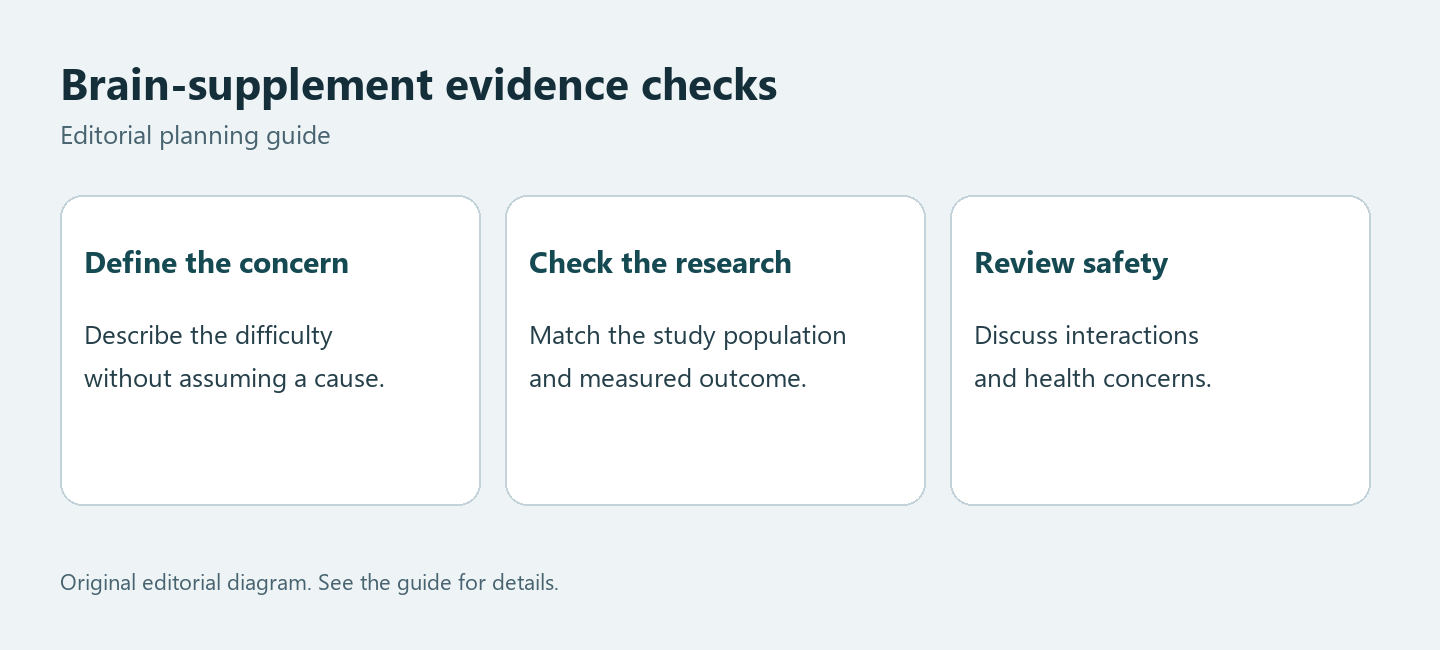
Define the concern before choosing an active.
Put the issue into plain words. Are you losing your place on a screen, missing meetings, fighting afternoon fatigue, or feeling tense before the market opens? Write down when it starts and how it affects daily work. Clear notes help a doctor far more than asking for a generic focus pill.
The NHS advises seeing a GP when memory problems affect daily life. Poor sleep, high stress, anxiety, and low mood can all cloud thinking. Guessing with store pills can delay proper care. Ongoing symptoms deserve a health check instead of a shelf of brain pills.
Read the result, group, and blend.
Check who joined the study, what dose they took, what the dummy pill group got, and which test the authors set as their main goal. A study in older adults with mild memory loss answers a very different question from screen focus in thirty-year-old analysts.
Separate the main planned test from side scores. Always compare the active group against placebo. Check if the store bottle uses the exact extract tested in the paper. Check who paid for the trial and if outside teams repeated the result.
| Ingredient. | Studied group. | Main limit for finance workers. |
|---|---|---|
| CDP-choline. | Adults aged 50 to 85 with memory complaints. | Missed its main spatial-memory goal. EFSA found cause and effect unestablished. |
| Bacopa herb. | Adults aged 65 and older over 12 weeks. | No gain in split focus or fast working memory. Stomach upset reported. |
| PS lipid. | Small stress-task group using a lipid mix. | No drop in felt mental stress. Does not prove trading discipline. |
| Omega-3 (EPA/DHA). | Healthy older and younger adult trials. | Mixed thinking test scores. No trial checks market choice quality. |
What the active research can tell you.
CDP-choline: selected memory findings need context.
A randomized CDP-choline trial followed 100 adults aged 50 to 85 with age-related memory decline. It found gains on side recall scores, yet saw no clear lead over placebo on its main spatial-memory test. The maker paid for the work. The paper did not test fast trading focus or check CDP-choline with coffee.
Looking at wider data, EFSA’s review of a CDP-choline memory claim found that the data did not prove a cause-and-effect link for adults with memory complaints.
Bacopa: a small study is not a general rule.
A placebo-controlled bacopa study tested 54 adults aged 65 or older. Delayed word recall improved, yet split focus and fast working memory showed no gain. Several users reported stomach cramps and nausea. The pill maker backed the trial. These results do not prove multitasking gains for desk workers.
PS lipid: a hormone shift is not emotional control.
A trial of a PS lipid lipid mix tracked hormone shifts during a lab stress test in healthy men. It found a hormone change only in a high-stress subgroup and saw no drop in felt mental stress. That narrow lab finding does not prove that a pill stops panic selling.
Omega-3: separate diet roles from pill claims.
The NIH omega-3 summary notes that fish-oil pills have not helped thinking scores in healthy older adults overall. A trial in younger adults saw faster computer test scores with an EPA-rich oil. Still, it was industry funded and did not test work output.
Check the label and quality proof.
Save the full Supplement Facts box, serving size, exact mg amounts, warnings, and company address. Front-label words like brain fuel tell you nothing useful. Whether you check a caffeine-plus-brain pill blend like Brain Actives, a formula like Neuro Energizer, or an audio program like Brain Song, verify the exact terms and disclosed doses first.
The NIH Office of Dietary Supplements explains that outside quality seals check factory rules, listed amounts, and toxin limits. They never prove that a brain pill sharpens focus or is safe for every buyer.
Review safety with a doctor or druggist.
Take the full label and a list of your doctor drugs, pain pills, and other supplements to a druggist or doctor. Explain why you want to try the item. Ask about drug clashes, extra caffeine, blood pressure risks, and warning signs that mean you should stop.
NCCIH’s pill safety guide warns that herbs and brain pills can change how drugs work and raise risks around surgery. Plant origin never promises safety. A four-week study cannot prove that years of daily use are harmless.
Check your daily work routine.
Before buying pills, check your sleep hours, screen breaks, and shift lengths. The NIH explains that short sleep harms focus, choices, and mood control. It slows reaction times and raises error rates. No pill replaces lost sleep during busy market weeks.
Track your sleep hours, coffee intake, and focus dips for two weeks before meeting a doctor. Keep health notes separate from trading profit and loss numbers. Market swings cannot measure whether a pill helped your brain.
Use an order checklist.
- Write down the exact symptom and ask if it needs a health checkup.
- Read the full human study, including age group, main test, and null results.
- Match the studied extract and mg dose against the bottle label.
- Review all drugs and health issues with a doctor or druggist.
- Skip the order when the label hides doses or relies on vague promises.
Common questions.
Which pill is best for traders?
Published trials do not rank pills for market traders. Any smart choice depends on your exact health need, matching human research, and a druggist safety check rather than a Wall Street box theme.
Should I combine these actives before work?
Clinical papers on single extracts do not prove that mixing several brain pills before work is safe or helpful. Show the exact bottles to a doctor instead of building a homemade stack.
Can a brain pill offset short sleep during market hours?
No. NIH sleep guidance shows that sleep loss directly harms judgment, focus, and impulse control. Taking stimulants or herbs to stretch long shifts can worsen fatigue and errors.
Discussion