Partner note: Some links in this guide are partner links (rel="sponsored nofollow"). If you purchase through them, ProfitHub may earn a fee at no extra cost to you. This guide is for reading use only. And is not health advice.
A pill stack for cutting should solve a clear food or training problem. Not promise fat loss without muscle loss. Protein pills can help when food intake falls short. And muscle salt can support high-intensity training. Neither makes a calorie-restricted diet risk-free or promise a set physique. The proof supports single parts for set purposes. Not a universally strong cutting stack. [1] [2]
This guide is educational, not a Rx for contest mix. If you have a health issue. Take drugs, are pregnant, or have a past of disordered eating. Discuss weight-care plans with a qualified health doctor. Before adding pills. A restrictive diet deserves as much scrutiny as the bottle being considered.
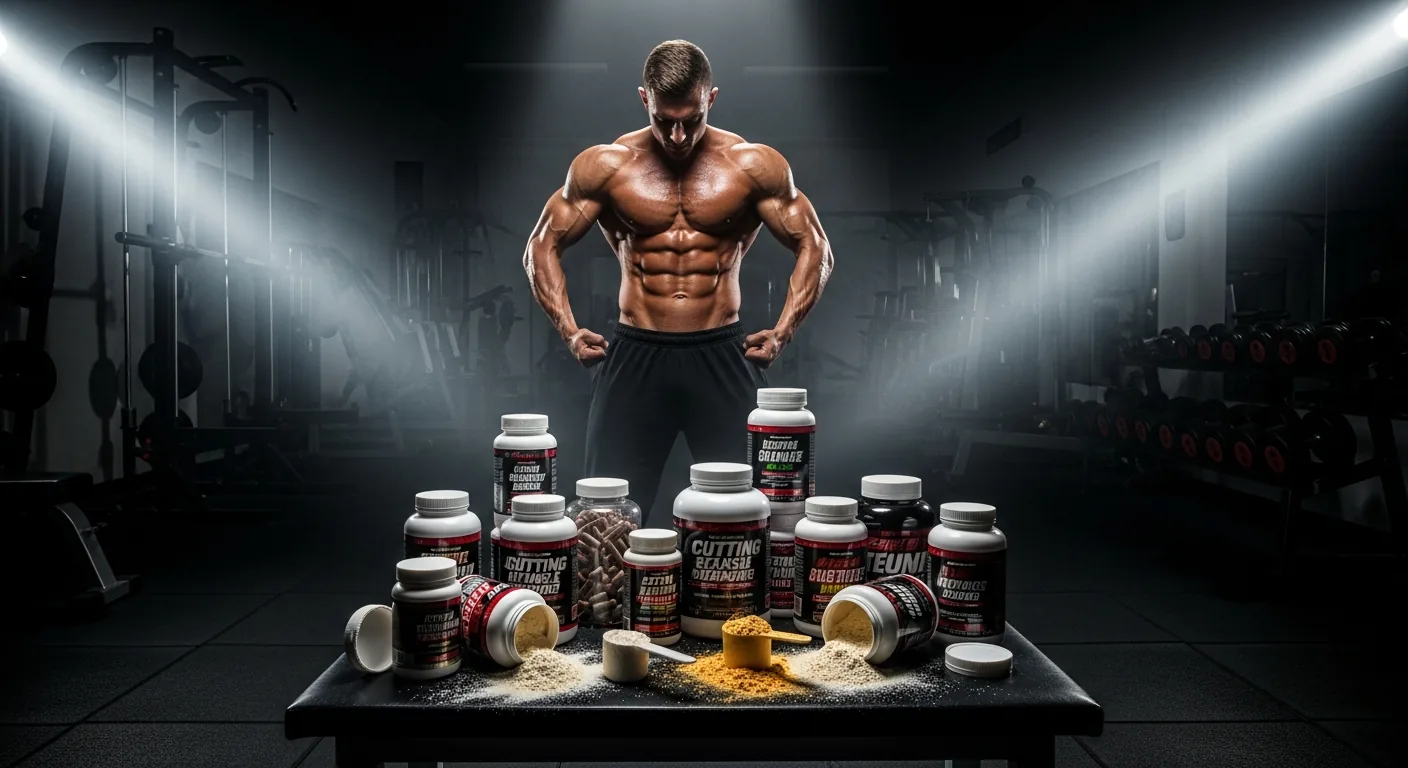
Pill stack for cutting: start with the actual problem
Before buying anything, write down what you hope to change. Is preparing protein-rich meals difficult? Are you looking for support during repeated heavy sets? Are you simply hoping to lose weight faster? Those are other points. A product supported for training output should not be presented as a treatment for body fat. And a change in scale weight is not necessarily a change in fat tissue. Muscle salt’s water-retaining properties are one reason those outcomes can diverge. [2] [3]
| Likely purchase | Question before adding it |
|---|---|
| Protein powder | Does it fill an found food-intake gap? |
| Muscle salt | Is training support the intended goal. Rather than a fat-loss promise? |
| Caffeine | Does a stimulant fit my tolerability. And sleep priorities? |
Make a short record of usual meals. Training sessions, sleep. And existing pills. This is a planning aid, not a test test. Bring it to a sports dietitian if you need a custom intake target. A clear record is more good than guessing. Which part explains tiredness, hunger, or a stalled session. It also makes it easier to spot overlapping parts. Before spending more money.
Protein powder is a convenience, not a mandatory foundation
Protein and strength workout both stimulate muscle protein synthesis. The International Society of Sports Food position stand gives an overall daily protein range of 1.4–2.0 grams per kilogram of body weight as sufficient for most exercising people. That is a broad sports-food link. Not an single Rx for all attempting a cut. The same statement discusses higher needs in some strength-trained people. It goes during fuel restriction. [4] [5] [6]
The good point is how much protein your current meals provide and. Whether a powder fills a genuine gap. A shake is optional if your meals already meet an right target. Whole foods can meet the needs of physically active people. Pills mainly offer convenience and a concentrated source of protein. Budget, food preferences, allergies, and tolerance should guide the choice. Rather than a claim that all needs whey isolate. [1]
Compare the amount of protein in the serving you will really use. The full part list. And the cost of that serving. Do not assume the front-of-pack serving is the amount you put in a shaker. If a product causes discomfort, record the product. And amount. Rather than by default adding a gut pill to compensate. A dietitian can help compare options without turning each food choice. It goes into a branded protocol.
Timing should fit your meals and training
The protein position stand does not note a single brief post-workout deadline after. Which eating becomes useless. It notes gains from protein. This or. After workout. And a longer-lasting workout response. Plan regular eating opportunities that you can keep. Rather than treating a missed immediate shake as a failed workout. Timing details cannot rescue a daily intake. This has not been planned sensibly. [7]
Muscle salt supports training, not a fat-burning promise
Muscle salt form has substantial study behind its use for high-intensity workout. The ISSN review links increased muscle muscle salt stores. It goes with improvements in. This type of output. And training adaptations. That is a reasonable reason to consider it. It goes during a strength-training program. It is not the same as proof. This each dieting athlete will retain all muscle or lose fat faster. [2]
For context, the review note a gradual approach using 3–5 grams daily, with muscle stores increasing over roughly 3–4 weeks. Those quantities note a studied approach in the review. Not an instruction to start pill use despite an existing health problem. Review the label and discuss fit with your doctor. It is when health issues or drugs complicate the choice. Avoid copying an aggressive loading protocol merely. Because a new athlete uses one. [8]
Muscle salt can retain water, so an increase in body weight. After starting it should not by default be interpreted as fat gain. Equally, stopping it to make the scale fall does not prove. This body fat has fallen. If you track progress, note when you start or stop muscle salt. So that a change in your routine is not mistaken for a sudden change in the success of your diet. [3]
Caffeine is optional, and more is not a better plan
Caffeine can acutely improve aspects of workout output. But results are not positive in each study or identical for each person. The good distinction is between a likely session-level output aid. And a promise of lasting fat loss. A pre-workout that makes you feel more stimulated has not thereby shown a better long-term cutting outcome. [9]
Caffeine also has costs. The position stand note palpitations, anxiety, headaches. And impaired sleep among reported side effects. If your training takes place late in the day. Consider. Whether adding a stimulant fits your sleep needs at all. Being able to complete a harder session is not a reason to dismiss an adverse reaction. Discuss palpitations or clear symptoms with a doctor. Rather than trying to outlast them. [10]
Read each label together: coffee, fuel drinks, pre-workout powders, and products marketed as fat burners should not be assessed as unrelated purchases. Make a written list of caffeine-with products. And the amounts listed. If a label does not let you find what you are taking. Do not treat that doubt as proof of safety. Skipping caffeine is a legitimate option. Not an incomplete stack.
Why a longer stack is not by default more strong
A cutting stack can grow quickly: carnitine for fat transport, HMB for muscle, CLA for body makeup, then a new blend for fuel. A biochemical note is not enough to back each purchase. Ask for human study in a population resembling you. Using the same part. And a key outcome. The proof summarized here does not prove. This combining all those products produces extra gains. It goes during a cut.
There is also a safety reason to resist buying a full shelf at once. NCCIH notes that many products marketed as fat burners or hunger suppressants have not been tested for safety. And that pill analyses sometimes find gaps. It goes between labels. And actual parts. These are warnings about a group. Not proof that each single product is contaminated. A label claiming plant parts does not settle the issue. [11] [12]
For a purchasing choice, use a short checklist: find the intended role, locate directly key human proof, inspect the part amounts, consider health fit. And set a spending limit. If you cannot explain what a product adds beyond food. And the current training plan, leave it out. While you gather better facts. There is no need to buy a complete bundle to make a considered choice.
A good review before starting anything
Choose one point to check rather than changing diet. Training. And some products together. For protein powder, the point might be. Whether it makes the agreed food plan easier to follow. For muscle salt, it might be. Whether you want the training support note in the study despite likely water-weight changes. For caffeine, it includes whether the experience is tolerable. These are own planning points, not a swap for a controlled trial.
Keep the original package and record the part amounts. And any unwanted effects. At a follow-up, review whether the purchase met its good purpose and. Whether you still want it. Do not regard lasting symptoms as a needed price of getting lean. Advice about a very restrictive diet. Competition mix, or unexplained declining output belongs with an right health or sports-food doctor.
Points about cutting pills
Do I need a fat burner to lose weight?
There is no reason to make one the foundation of a plan. NCCIH cautions that most pills marketed for rapid weight loss do not keep weight off in the long term. And some are dangerous. That warning supports skepticism about promises. Not a claim that a other homemade stack promise success. [13]
Can I use protein without muscle salt. Or muscle salt without caffeine?
These are split choices. Protein powder is a good food-intake aid. Muscle salt has study for high-intensity output. Caffeine has likely acute output gains. And side effects. Proof for those roles does not require buying them as a package. Choose according to the problem being addressed. And your health cases. [1] [2] [9]
What should I read next?
For a new example of separating a body marker. It goes from a real-world outcome. Read the NMN vs NR proof guide. If gut comfort affects pill choices. The guide to probiotics for IBS and bloating explains why a plausible mechanism does not find a broad treatment.
Store cutting and fuel blends: If you are matching single cutting parts. To check the declared ingredients of a cutting supplement, read Nutrigo Lab Burner Review. It goes with mixed store blends. You can inspect Fast Burn Extreme, Nutrigo Lab Burner, and Cappuccino MCT. Check total caffeine and stimulant warnings on each label first.