Partner note: Some links in this guide are partner links (rel="sponsored nofollow"). If you purchase through them, ProfitHub may earn a fee at no extra cost to you. This article is for reading use only. And is not medical advice.
Trying to lower blood sugar naturally with pills? Start with the limits: NCCIH describes only weak proof of possible benefit for a few parts. Not a reliable replacement for diabetes care. Root extract, chromium and cinnamon deserve a closer look. But a promising study is not a Rx. [1: NCCIH]
This guide explains what the proof can support. Where it falls short. And what to ask. Before buying. It is reading facts, not a diagnosis or an personal treatment plan.
This article contains partner links. Purchases through them may earn the publisher a fee.
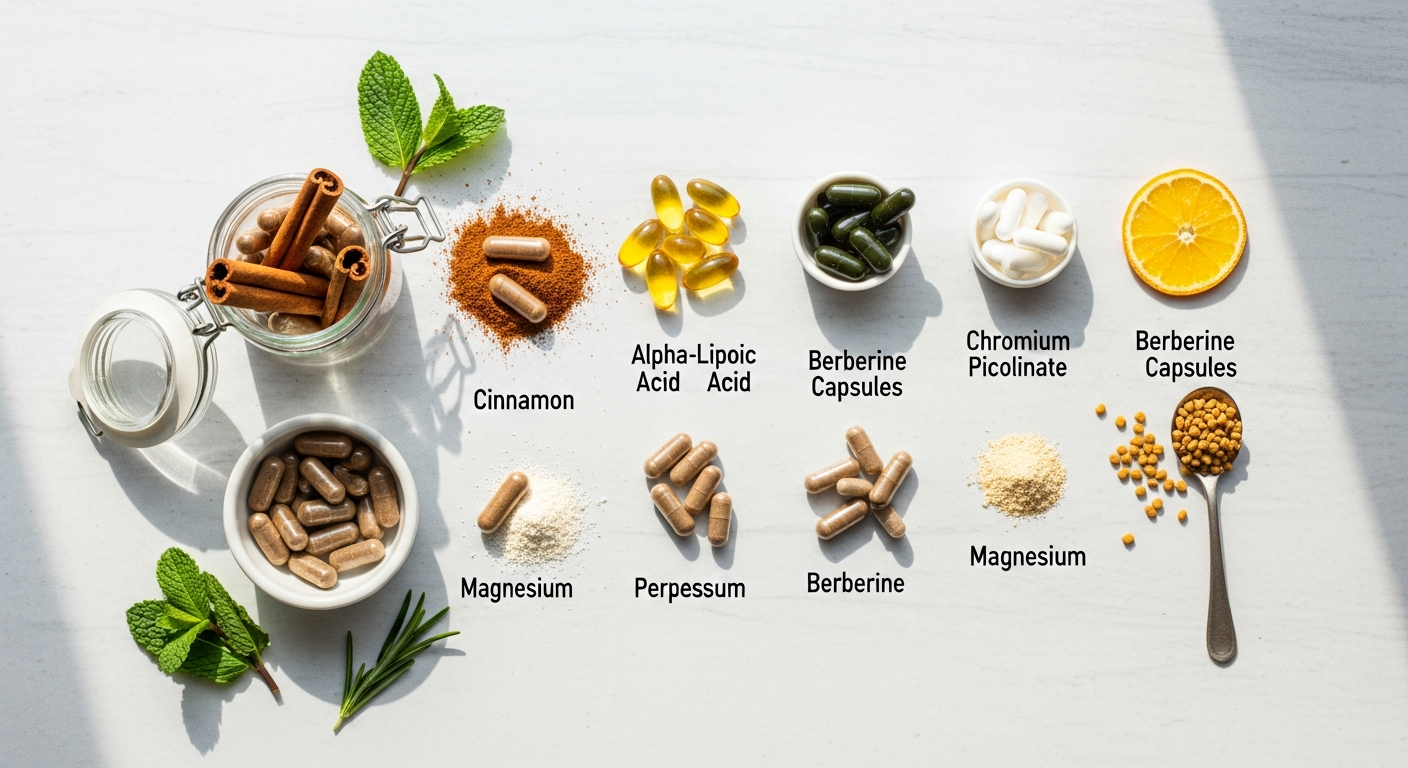
Lower blood sugar naturally: start with diabetes care
Blood sugar is another name for blood glucose. When evaluating a blended glucose-support supplement, check NuviaLab Sugar Control Review. Diabetes occurs when it is too high. Over time, excess glucose can damage health, including the heart, nerves, eyes. And kidneys. That is why the aim is an agreed care plan. Rather than chasing the lowest reading possible. [3: NCCIH]
A glucose reading and an A1C result answer different points. A home meter shows glucose at that moment. An A1C test reflects the average over the last three months. Ask your team which measure to follow. And what your personal target is. Before judging any change. [5: NIDDK]
Bring the actual results to an appointment. Rather than describing them as slightly high. Write down when the measurement was taken. Whether it followed a meal. And what you were already taking. This gives the conversation a clear starting point. It goes without treating an online pill list as a diagnosis.
What does the proof for blood sugar pills show?
The studies do not all test the same people. Products, doses or treatment periods. NCCIH says these gaps, along with small studies. And inconsistent results, prevent clear conclusions. A product containing a studied part therefore needs its own scrutiny. The part name alone is not enough. [6: NCCIH]
Root extract: possible benefit, key limits
Root extract has been studied in people. It goes with type 2 diabetes. Sometimes alongside treatment. NCCIH describes possible benefit but notes poor-quality studies. Variable effects. And a study base concentrated in Chinese patients. That is a reason to discuss it. It goes with a doctor. Not to call it equivalent to a prescribed medicine. [8: NCCIH]
Digestive side effects include nausea, abdominal pain, bloating, hard stools. And diarrhea. Root extract can interact with medicines. Including cyclosporine. Avoid it during pregnancy or breastfeeding. And do not give it to infants; NCCIH links infant exposure with harmful bilirubin buildup. [12: NCCIH]
The pregnancy and infant warning is not a minor label detail. NCCIH mainly advises against root extract during pregnancy. Breastfeeding. And infancy. Anyone checking it should review both the product. And their drug list. Before starting. [14: NCCIH]
Chromium: do not assume more is better
Some chromium studies suggest improved glucose measures. But that does not make it a routine advice for everyone. NCCIH reports stomach pain and bloating. As well as reports of kidney, liver, muscle. And skin problems. After large doses. Long-term effects have not been well investigated. [17: NCCIH]
When comparing labels, copy the amount per daily serving. Not just the number on the front. Ask what specific reason there is to take chromium in your situation. If the explanation is simply that it appears in many blood sugar products. That is a marketing observation. Rather than a treatment rationale.
Cinnamon: a food part is not a treatment plan
Some studies have reported changes in fasting glucose. It goes with cinnamon. But NCCIH says standardized study is still needed. Different blends and treatment schedules make results hard to compare. Do not treat a kitchen spice. A concentrated capsule. And a branded mixture as interchangeable proof. [19: NCCIH]
Cassia cinnamon contains varying amounts of coumarin. For human-trial findings on cinnamon and bitter melon, see Ceylon Cinnamon and Bitter Melon Extract for Fasting Blood Glucose. Which might cause or worsen liver disease. A product described as natural still needs a safety review. Mainly if you already have liver problems. Culinary use and taking concentrated pills are different decisions. [20: NCCIH]
Gymnema and apple cider vinegar: no advice here
Gymnema and apple cider vinegar often appear in shopping lists for this topic. This guide does not recommend either or provide a dosing schedule: the proof reviewed here does not prove a specific product or regimen to use. Ask for study on the exact mix. Rather than accepting traditional use, testimonials or an part diagram as the answer.
Useful steps to discuss before buying
Food choices and physical activity are proven parts of diabetes care. NIDDK recommends working with the care team. Including a dietitian or diabetes educator when current. To create a meal plan that fits your preferences. You do not need to invent a restrictive diet. It goes from a pill advertisement. [21: NIDDK]
Physical activity may help lower blood glucose. Blood pressure. And cholesterol. Choose something you can discuss realistically with your team. Such as walking or suitable strengthening activities. Rather than copying an unfamiliar workout. Sleep and mental health also belong in that conversation. Especially when daily routines feel difficult. [22: NIDDK]
For the next appointment, make a short list of useful barriers. Perhaps food costs are the problem. Your work schedule changes, or you cannot fit an appointment around caregiving. Ask for help with the actual obstacle. A capsule purchase should not become the default answer to a problem you have not had a chance to describe.
Drug clashes and warning signs
Keep taking prescribed medicines as directed. Even if you feel well or reach your glucose goal. If cost or side effects are making that difficult. Contact the care team. Rather than rationing medicines or substituting pills. NIDDK explicitly advises against skipping or rationing treatment. [24: NIDDK]
Some pills have serious adverse effects. Including kidney damage. This deserves set attention in diabetes. Because kidney disease is already a concern. Tell your doctor about every pill. Including teas. And mix products. And ask. Whether extra monitoring is needed. [27: NCCIH]
Low blood glucose is also a safety issue. Ask your team for written instructions covering readings below your target range. Symptoms. And when to seek urgent help. NIDDK recommends telling the team when levels frequently go above or below your personal target. Pill testing is not a substitute for that conversation. [28: NIDDK]
A label-and-appointment checklist
| Document | Question to take to the appointment |
|---|---|
| Full part label | Does this exact mix have proof relevant to my situation? |
| Medicine and pill list | What clash checks or monitoring would be needed? |
| Glucose records and test results | Which target and review plan should I follow? |
| Order and subscription details | What would I pay, and how would I cancel? |
- Bring the container or a clear photograph of the complete label.
- List Rx medicines, nonprescription medicines and other pills.
- Ask what problem the proposed part is meant to address.
- Ask what result would justify continuing. And when it would be reviewed.
- Record the ongoing cost, cancellation terms. And return policy. Before paying.
Do not assume that an online product matches the mix used in study. NCCIH warns that store-bought and online pills can differ in key ways. It goes from studied products. Keep the proof point separate from the shopping point: a clear label makes match possible. But it does not prove benefit. [29: NCCIH]
Checking blood sugar pill labels
Evaluate a blood sugar pill by its complete label. For a food-first discussion of fibre around mealtimes, consult Soluble Fiber Before Meals for Blood Sugar Spikes. And the proof for the exact mix. Store references are not proof that a product lowers blood sugar. Before ordering, identify the seller, copy the part amounts per serving. And keep the sold claim current for talk. It goes with your care team.
Check where a store link leads. Before making a purchase. If the page offers several products. Record the exact item you are checking. Rather than relying on the link label. Can you find a complete part panel. Clear serving instructions, the total order cost. And a cancellation contact? Save those details before checkout. Bring the label and your points to your appointment. Rather than treating an order confirmation as a care plan.
Points to take to your care team
Can pills replace diabetes medicines?
No. Do not replace medical treatment with an unproven product. NCCIH warns that products marketed as natural diabetes cures can be harmful. Including when they displace effective treatment. Ask your doctor about treatment changes. Rather than making them. Because of an advertisement. [30: NCCIH]
How should I track whether my plan is working?
Ask how often to check glucose. What to record. And when to report results. NIDDK recommends recording the date, time, result. And relevant details such as food or activity. Then bringing that facts to visits. Agree on the monitoring plan before adding anything new. [31: NIDDK]
For related reading, see our root extract and Rx glucose drug match. Use it to prepare points, not to switch treatments yourself. The useful next step is a clear plan. It goes with your care team. Not a longer pill shopping list.