Affiliate disclosure: Some links in this guide are affiliate links (rel="sponsored nofollow"). If you purchase through them, ProfitHub may earn a commission at no extra cost to you. This article is for informational purposes only. And is not medical advice.
Magnesium glycinate is one form of supplemental magnesium sold for sleep. And calm. The mineral backs normal nerve, muscle. And bone function. But those roles do not prove that glycinate cures insomnia or anxiety. Before buying, check your health goal, the human trial limits. The exact bottle label.
This guide reviews public health sheets. And a human trial. It does not report personal item testing, rank brands, or give a health care plan. All links below point to non-store health bodies. And published research.
What is magnesium glycinate?
Magnesium bisglycinate binds elemental magnesium to the amino acid glycine. Study teams tested this exact form in the clinical trial discussed below. When you check a store bottle with a paper, read the exact chemical name. And the full active list. A matching front title does not prove that two blends are identical.
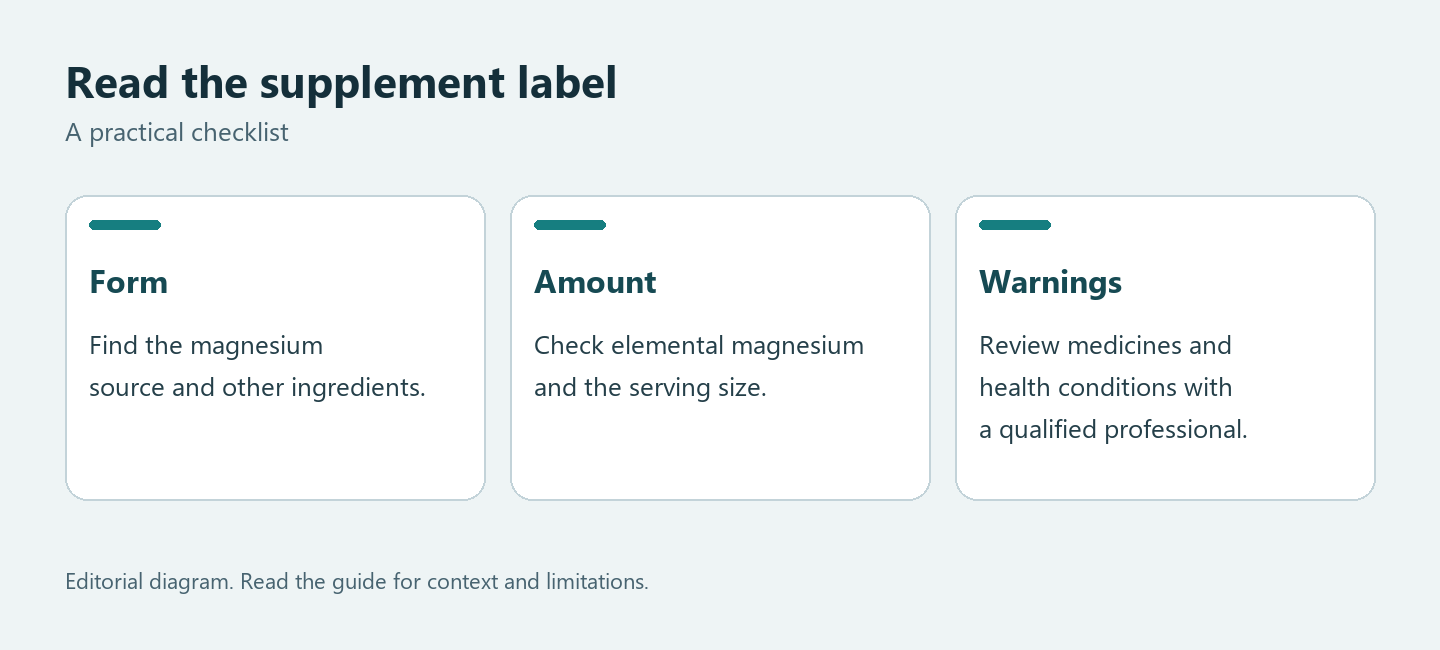
Front labels often skip key facts. Look at the back panel to find the magnesium salt, the serving size. And any added herbs or sleep aids. If a pill blends magnesium with other active compounds, you must judge the whole mix. A trial on pure bisglycinate never validates an untested mixed sleep blend.
| Label item. | What to record. | Why it matters. |
|---|---|---|
| Chemical form. | Magnesium bisglycinate or glycinate vs oxide or citrate blend. | Buffered blends mix oxide with glycinate. And change how the item behaves. |
| Elemental amount. | Milligrams of actual magnesium per serving, not total compound weight. | US panels list elemental weight. Meanwhile, front badges often show total salt weight. |
| Added actives. | Melatonin, herbs, or vitamin B6 added to the pill. | Extra actives bring split side effects. And medicine clashes. |
What gains belong to magnesium itself?
The NIH Office of Dietary Pills buyer fact sheet notes that magnesium helps muscles contract, nerves send signals. And cells build bone, protein. And DNA. Every daily source of the mineral backs these daily tasks. They are normal nutrient roles, not proof that a glycinate pill outperforms food.
You can get magnesium from beans, lentils, nuts, seeds, whole grains. And dark leafy greens. Check your daily meals before shopping for pills. If you think your diet falls short, talk with a doctor or dietitian. A low food intake is a reason to review your meals, not automatic proof that a pill will fix tiredness or poor sleep.
What does the sleep research show?
Sleep studies must be read by exact salt, dose. And group. NCCIH’s overview of complementary approaches to sleep points to small study sets and mixed results. It does not confirm a reliable sleep gain for every magnesium bottle on the market.
A randomized placebo trial published in 2025 followed 155 healthy adults who reported poor sleep. After four weeks, the bisglycinate group showed a slightly larger drop on an insomnia score sheet than the placebo group. The gain was modest. The authors asked for longer trials with objective sleep tracking.
That result applies only to the tested blend, group. And four-week window. It does not prove that every glycinate brand works, that glycinate beats other forms, or that your own sleep will change. Do not copy a research dose as a personal health plan.
Can it be recommended for anxiety?
The 2025 sleep trial does not back magnesium bisglycinate as an anxiety care. Its authors found no clear between-group gains on the other mood. And stress scales they tracked. A small shift on a sleep survey cannot be sold as human proof that a pill relieves anxiety.
If worry or panic drives your search, tell a doctor directly. Describe your daily symptoms and any care you already use. This guide cannot find the cause of anxiety, replace health care, or pick a calming pill. Marketing words like calm or unwind do not settle human questions.
How should you read the label?
The NIH doctor fact sheet explains that a US Pill Facts box lists elemental magnesium. Rather than the total weight of the chelate salt. Always check which weight a brand quotes. Do this before you check two bottles. Count how many pills make one full serving.
Write down the brand name, the magnesium source, the elemental mg per serving, the other actives. The warning text. If a web page hides the Pill Facts panel, ask the seller for the current label. Save a photo of the bottle. So your druggist can review the exact blend.
What should you check before taking it?
NIH warns that high doses of supplemental magnesium can trigger loose stools, nausea. And stomach cramps. Weak kidney function raises the danger of serious magnesium buildup in the blood. These safety rules still apply when the bottle says gentle glycinate.
Magnesium also binds to several common drugs. NIH flags clashes with oral bisphosphonates. And certain antibiotics. And notes that some diuretics. And acid blockers alter magnesium levels. Ask a druggist to check your full medicine. And pill list. And give you a safe timing schedule.
How do you decide whether to buy?
Write down the exact symptom you want to help. Do this before you browse stores. Check whether human trials tested that symptom in people like you with the same salt. Keep any open safety questions on your list when you speak with a doctor.
A smart review can end with a choice to skip the order, track your sleep habits, or add magnesium-rich foods instead. If a doctor suggests a trial, ask how long to test it. And what signs mean you should stop.
What is the gap between elemental magnesium. And compound weight?
Elemental weight measures only the pure magnesium mineral inside the dose. Compound weight includes the attached glycine amino acid. That makes the number look much larger on the front of the bottle.
How can I spot a buffered magnesium glycinate blend?
Read the active line inside the Pill Facts panel. If it lists magnesium oxide with magnesium bisglycinate, the item is a buffered mix. Rather than pure bisglycinate.
Who should talk to a druggist. Before using magnesium glycinate?
Anyone with kidney disease or anyone taking antibiotics, bone-density pills, blood-pressure drugs, or acid blockers should ask a druggist or doctor. Do this before starting a pill.
Sources.
- NIH ODS: Magnesium, buyer fact sheet.
- NIH ODS: Magnesium, doctor fact sheet.
- NCCIH: Sleep Disorders and Complementary Health Approaches.
- Schuster and colleagues: Magnesium Bisglycinate Daily use in Healthy Adults Reporting Poor Sleep, split-group placebo trial.
Store sleep and stress blends: If you match this salt with mixed store blends, you can check Restilen or Yu Sleep. Check each full label and dose before buying.